Commercial & Research
eDNA for land trusts and conservation easements
May 15, 2025 · 6 min read
Land trusts protect land, then face a hard question: how do we prove the protection is working? Traditional monitoring is expensive, patchy, and heavily dependent on which staff biologist happened to visit. eDNA offers a repeatable, cross-taxa alternative that scales across an easement portfolio.
The baseline problem
Most easements have thin biological baselines — a plant list from a walk-through, maybe a bird checklist. When something changes years later, there is no defensible baseline to compare against.
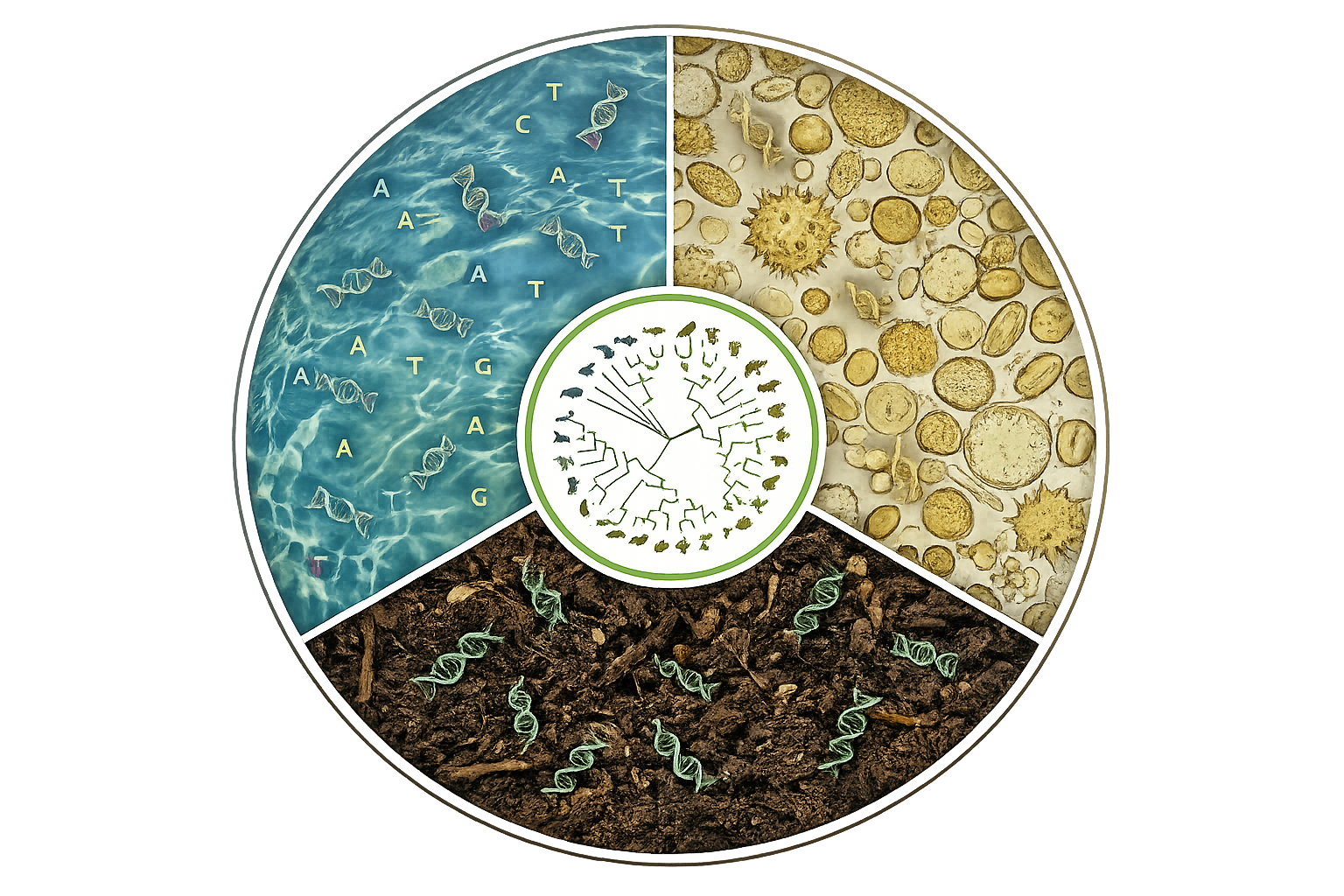
A standardized eDNA baseline across soil, water, and flower samples produces a taxonomically broad, timestamped record that captures vertebrates, invertebrates, plants, and fungi at once.
Monitoring over time
Repeat sampling every three to five years at the same sites shows community trajectory — which species are gaining, which are declining, whether restoration work is producing measurable gains. This is precisely the kind of documentation that donors, boards, and accrediting bodies increasingly ask for.
Rare-species surveillance
Many easements are motivated by a specific species — a bog turtle population, a stand of native fish, a colonial waterbird site. Targeted qPCR on eDNA samples is a cheap and highly sensitive way to confirm continued presence season after season without stressing the population.
Cost per acre monitored
For a typical mid-sized preserve, a full seasonal eDNA baseline runs in the low thousands of dollars — a fraction of what an equivalent multi-taxon field survey would cost. Recurring monitoring costs are similarly modest.