EnviroCoder logoEnviroCoder
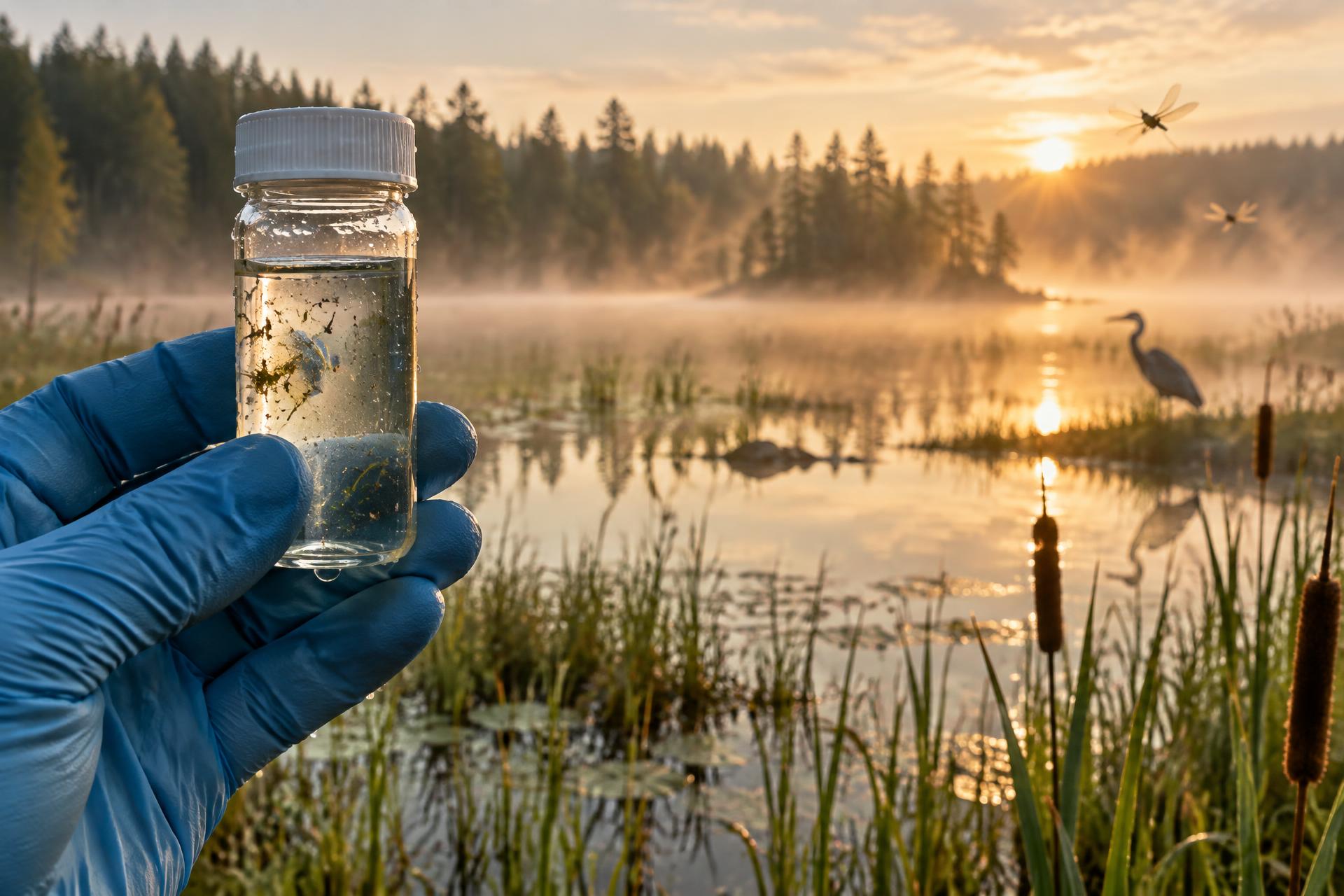
A gloved hand holding a vial of lake water at a misty wetland shoreline

Biodiversity Genetic Kits

eDNA Metabarcoding & Species-Targeted qPCR

Ecosystems, decoded.

Field Journal / Sample results

Louis Wildlands Restoration

Report EC-EDNA-2026-LWP-2G-0417

EnviroCoder

138

species detected

2

groups tested

Animalia & Plantae

Relative abundance

Common loon

Gavia immer

0.38

White water lily

Nymphaea odorata

0.45

Painted turtle

Chrysemys picta

0.55

Expand

Select your view

How it works

One kit, four steps.

  1. 01

    Collect

    Your field staff collect water or soil samples using site-ready kits and standardized protocols.

  2. 02

    Send

    Prepaid return mailers keep chain of custody simple, whether you ship one site or a full season.

  3. 03

    Analyze

    Our lab runs eDNA metabarcoding or targeted qPCR to identify the species present.

  4. 04

    Explore

    Results arrive in your Field Journal, ready for reports, permits, grant updates and board meetings.

Sample instructions

Validated procedures & methodology

Science you can defend, data you can report.

Every EnviroCoder survey follows standardized, peer-reviewed workflows — from sterile field collection through extraction, amplification, sequencing and bioinformatics. Controls, documentation and reference-database matching are built into each step, so your results hold up in permit applications, management plans, grant reports and regulatory review.

Peer-reviewed assays

eDNA metabarcoding with established, published primer sets and species-targeted qPCR assays chosen for sensitivity and specificity to your target taxa.

Standardized field protocols

Sterile, single-use collection kits and step-by-step instructions minimize contamination and keep sampling consistent across sites, crews and seasons.

QA/QC at every step

Field blanks, extraction blanks and PCR negative and positive controls run with every batch, so detections are distinguishable from noise.

Documented chain of custody

Unique sample IDs, tracked return mailers and collection records link every result back to its site, date and collector.

Curated reference matching

Sequences are matched against curated reference libraries with conservative confidence thresholds before a species is reported.

Report-ready deliverables

Species lists, relative abundance scores and exportable data formatted for management plans, permits, grants and stakeholder reporting.

Programs

Scaled to the way your organization works.

Single-site survey

A one-time baseline or screening for a property, permit or project area.

Seasonal monitoring

Repeat sampling across seasons to track change, invasives and outcomes.

Multi-site & multi-year

Program contracts across many properties or projects with volume pricing.

What you receive

  • Field Journal

    An online results view your team can revisit and share.

  • Data export

    Species detections in a spreadsheet-ready format.

  • Report summary

    A concise write-up for boards, clients and grant reports.

  • Methods statement

    Sampling and lab methods for permits and proposals.

Your findings / one place

From DNA traces to discoveries you can explore.

Your Field Journal makes species results easy to revisit and share in a conversation — alongside the details and observations from your own site.

Preview sample results

Your own findings appear after your sample is analyzed.

Field Journal / Sample results

Louis Wildlands
Restoration

Report EC-EDNA-2026-LWP-2G-0417

EnviroCoder

138

species detected

2

groups tested

Animalia & Plantae

Relative abundance

Common loon

Gavia immer

0.38

White water lily

Nymphaea odorata

0.45

Painted turtle

Chrysemys picta

0.55

White-tailed deer

Odocoileus virginianus

0.88

American beaver

Castor canadensis

0.62

North American river otter

Lontra canadensis

0.45

American mink

Neogale vison

0.30

Muskrat

Ondatra zibethicus

0.74

Raccoon

Procyon lotor

0.20

Red fox

Vulpes vulpes

0.55

Coyote

Canis latrans

0.12

Black bear

Ursus americanus

0.06

Bobcat

Lynx rufus

0.06

Eastern gray squirrel

Sciurus carolinensis

0.67

Red squirrel

Tamiasciurus hudsonicus

0.25

Eastern chipmunk

Tamias striatus

0.50

Woodchuck

Marmota monax

0.15

White-footed mouse

Peromyscus leucopus

0.81

Meadow vole

Microtus pennsylvanicus

0.33

Northern short-tailed shrew

Blarina brevicauda

0.88

Star-nosed mole

Condylura cristata

0.62

Big brown bat

Eptesicus fuscus

0.45

Little brown bat

Myotis lucifugus

0.30

Eastern cottontail

Sylvilagus floridanus

0.74

Virginia opossum

Didelphis virginiana

0.20

Striped skunk

Mephitis mephitis

0.55

North American porcupine

Erethizon dorsatum

0.12

Great blue heron

Ardea herodias

0.08

Green heron

Butorides virescens

0.67

Wood duck

Aix sponsa

0.25

Mallard

Anas platyrhynchos

0.50

Hooded merganser

Lophodytes cucullatus

0.15

Canada goose

Branta canadensis

0.81

Belted kingfisher

Megaceryle alcyon

0.33

Bald eagle

Haliaeetus leucocephalus

0.06

Osprey

Pandion haliaetus

0.62

Red-shouldered hawk

Buteo lineatus

0.45

Barred owl

Strix varia

0.30

Pileated woodpecker

Dryocopus pileatus

0.74

Downy woodpecker

Dryobates pubescens

0.20

Ruffed grouse

Bonasa umbellus

0.55

Wild turkey

Meleagris gallopavo

0.12

Black-capped chickadee

Poecile atricapillus

0.38

Tufted titmouse

Baeolophus bicolor

0.08

White-breasted nuthatch

Sitta carolinensis

0.67

Red-eyed vireo

Vireo olivaceus

0.25

Wood thrush

Hylocichla mustelina

0.50

American robin

Turdus migratorius

0.15

Ovenbird

Seiurus aurocapilla

0.81

Yellow warbler

Setophaga petechia

0.33

Common yellowthroat

Geothlypis trichas

0.88

Scarlet tanager

Piranga olivacea

0.62

Northern cardinal

Cardinalis cardinalis

0.45

Red-winged blackbird

Agelaius phoeniceus

0.30

Song sparrow

Melospiza melodia

0.74

Blue jay

Cyanocitta cristata

0.20

Snapping turtle

Chelydra serpentina

0.12

Blanding's turtle

Emydoidea blandingii

0.06

Northern water snake

Nerodia sipedon

0.08

Eastern garter snake

Thamnophis sirtalis sirtalis

0.67

Northern ring-necked snake

Diadophis punctatus edwardsii

0.25

Green frog

Lithobates clamitans

0.50

American bullfrog

Lithobates catesbeianus

0.15

Wood frog

Lithobates sylvaticus

0.81

Spring peeper

Pseudacris crucifer

0.33

Gray treefrog

Hyla versicolor

0.88

American toad

Anaxyrus americanus

0.62

Red-spotted newt

Notophthalmus viridescens

0.45

Spotted salamander

Ambystoma maculatum

0.30

Eastern white pine

Pinus strobus

0.74

Eastern hemlock

Tsuga canadensis

0.20

Red pine

Pinus resinosa

0.55

Balsam fir

Abies balsamea

0.12

Northern white cedar

Thuja occidentalis

0.38

Tamarack

Larix laricina

0.08

Sugar maple

Acer saccharum

0.67

Red maple

Acer rubrum

0.25

Northern red oak

Quercus rubra

0.50

White oak

Quercus alba

0.15

American beech

Fagus grandifolia

0.81

Yellow birch

Betula alleghaniensis

0.33

Paper birch

Betula papyrifera

0.88

Black cherry

Prunus serotina

0.62

Quaking aspen

Populus tremuloides

0.45

American basswood

Tilia americana

0.30

White ash

Fraxinus americana

0.74

Black willow

Salix nigra

0.20

Speckled alder

Alnus incana

0.55

Witch-hazel

Hamamelis virginiana

0.12

Mountain laurel

Kalmia latifolia

0.38

Highbush blueberry

Vaccinium corymbosum

0.08

Buttonbush

Cephalanthus occidentalis

0.67

Winterberry

Ilex verticillata

0.25

Red-osier dogwood

Cornus sericea

0.50

Maple-leaved viburnum

Viburnum acerifolium

0.15

Spicebush

Lindera benzoin

0.81

Wild grape

Vitis riparia

0.33

Virginia creeper

Parthenocissus quinquefolia

0.88

Pickerelweed

Pontederia cordata

0.62

Yellow pond-lily

Nuphar variegata

0.30

Broad-leaved cattail

Typha latifolia

0.74

Arrowhead

Sagittaria latifolia

0.20

Soft rush

Juncus effusus

0.55

Tussock sedge

Carex stricta

0.12

Wild celery

Vallisneria americana

0.38

Common bladderwort

Utricularia macrorhiza

0.08

Swamp milkweed

Asclepias incarnata

0.67

Cardinal flower

Lobelia cardinalis

0.25

Blue flag iris

Iris versicolor

0.50

Joe-pye weed

Eutrochium maculatum

0.15

Jewelweed

Impatiens capensis

0.81

Canada mayflower

Maianthemum canadense

0.33

Trout lily

Erythronium americanum

0.88

Red trillium

Trillium erectum

0.62

Jack-in-the-pulpit

Arisaema triphyllum

0.45

Wild sarsaparilla

Aralia nudicaulis

0.30

Partridgeberry

Mitchella repens

0.74

Wintergreen

Gaultheria procumbens

0.20

Bunchberry

Cornus canadensis

0.55

Starflower

Lysimachia borealis

0.12

Goldthread

Coptis trifolia

0.38

Pink lady's slipper

Cypripedium acaule

0.06

Wild columbine

Aquilegia canadensis

0.67

New England aster

Symphyotrichum novae-angliae

0.25

Canada goldenrod

Solidago canadensis

0.50

Pennsylvania sedge

Carex pensylvanica

0.15

Cinnamon fern

Osmundastrum cinnamomeum

0.81

Royal fern

Osmunda spectabilis

0.33

Sensitive fern

Onoclea sensibilis

0.88

Christmas fern

Polystichum acrostichoides

0.62

Lady fern

Athyrium angustum

0.45

Hay-scented fern

Dennstaedtia punctilobula

0.30

Bracken fern

Pteridium aquilinum

0.74

Marsh fern

Thelypteris palustris

0.20

Shining clubmoss

Huperzia lucidula

0.55

Tree clubmoss

Dendrolycopodium obscurum

0.12

Sphagnum moss

Sphagnum palustre

0.38

Haircap moss

Polytrichum commune

0.08

Illustrative species only — not a real test result.

Standard deliverables

Every report, explained down to the sequence.

Each metabarcoding report ships with the same defensible documentation: sequence-level variant tables, per-sample species detections, a full QA/QC summary and a citable methods statement. Scroll through the pages of a standard report below.

Sequence-level data

ESV detail

Each Exact Sequence Variant carries an index ID, full taxonomy and a base-pair match score.

ESVGB_IDPhylumOrderFamilyGenusSpecies%match
ESV_000818EF103883StreptophytaFagalesFagaceaeQuercusQuercus rubra100
ESV_000080AB043749StreptophytaFagalesFagaceaeQuercusQuercus alba100
ESV_000214KX667936ChordataAnuraRanidaeLithobatesLithobates clamitans99.8
ESV_000391KF718308ChordataTestudinesEmydidaeChrysemysChrysemys picta99.6
ESV_000527MG709405StreptophytaPoalesCyperaceaeCarexCarex stricta99.9
ESV_000642AF327594ChordataPasseriformesParulidaeSetophagaSetophaga petechia99.7

Illustrative excerpt from report EC-EDNA-2026-LWP-2G-0417 — formatting shown as delivered.
Who we work with

Built for conservation organizations and environmental consultants.

A rocky creek winding through autumn woods on protected land

BIODIVERSITY MONITORING

Baseline and track biodiversity across every property.

Land trusts, conservancies, natural areas and state DNRs can document species, catch invasives early and measure stewardship outcomes over time.

Explore biodiversity monitoring
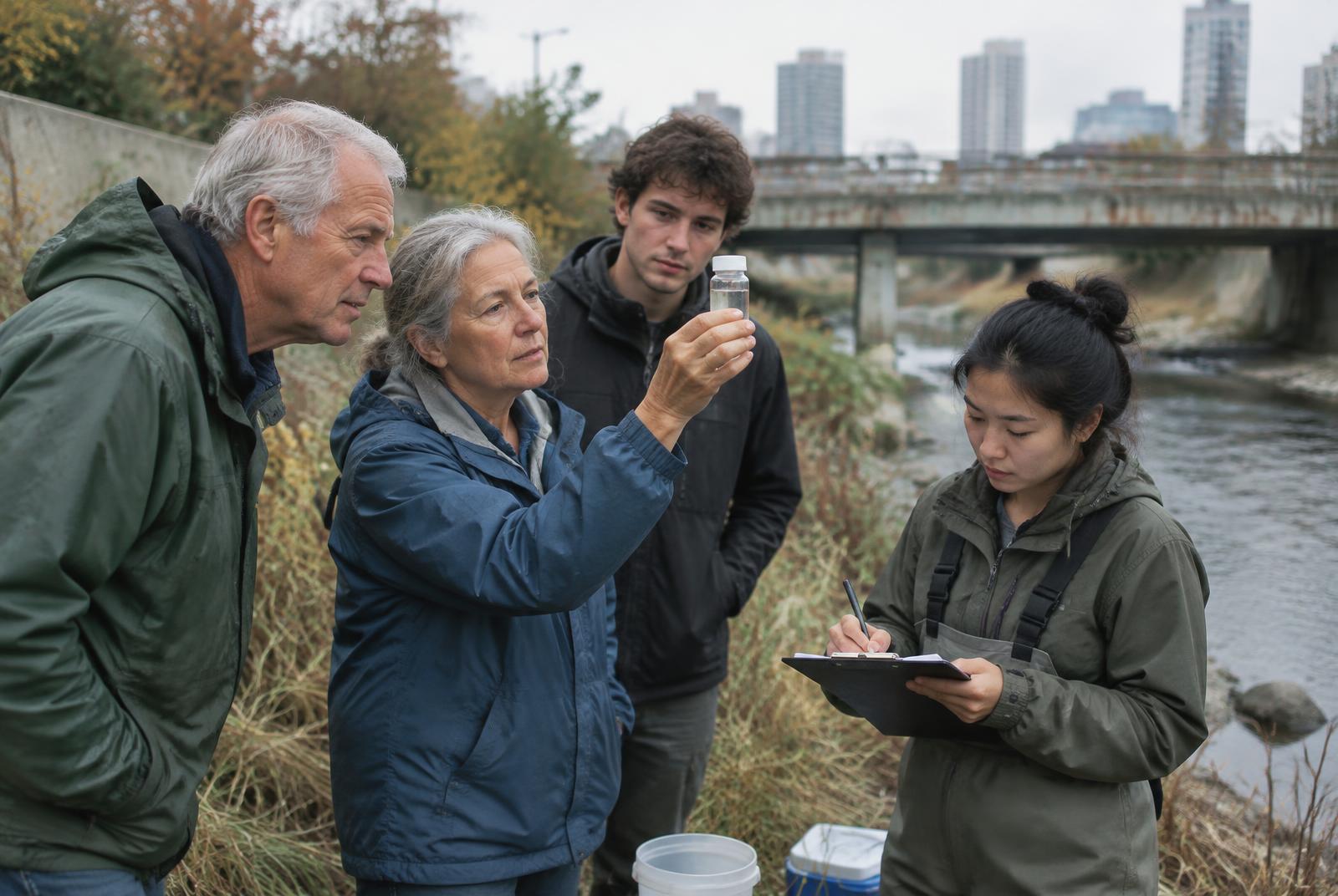
Volunteers sampling water together at an urban creek

WATERSHED MANAGEMENT

Survey data for agencies and consultants.

Fish and wildlife agencies and environmental and engineering firms can screen for target and protected species, support permitting and assessments, and scale sampling across projects.

Explore watershed management

Common questions

Questions from program managers and project leads.

Do our field staff need special training or lab equipment?+

No. Each kit includes standardized collection protocols, so seasonal staff, volunteers or consultants can sample consistently.

Should we choose eDNA metabarcoding or targeted qPCR?+

Metabarcoding detects many species at once for baselines and biodiversity surveys. qPCR targets specific species, such as invasives or protected species, with volume pricing for larger projects.

How are results delivered to our team?+

Results appear in your Field Journal, organized by site and survey, ready to reference in reports, grant updates and client deliverables.

Can you support multi-site or multi-season programs?+

Yes. Tell us about your sites, target species and timelines, and we'll scope a sampling plan and quote for your organization or client.

Scope your next survey

Ready to add genetic monitoring to your program?