01
Open your kit
Check the supplies and read the instructions included with your specific survey before you head into the field.
Field guide / 01
A careful collection is the beginning of every discovery. Here's the path from your kit to your results.
Start here
Collection methods differ by survey and sample type. Follow the booklet in your kit for the materials, handling and mailing steps specific to your order. This page is a general companion for planning your field visit.
Explore eDNA kitsKeep sample IDs, site conditions and collection notes together.
Example field data sheet & protocolThe field-to-lab journey
Check the supplies and read the instructions included with your specific survey before you head into the field.
Pick the place you'd like to investigate. Note the location and conditions so your findings have useful context.
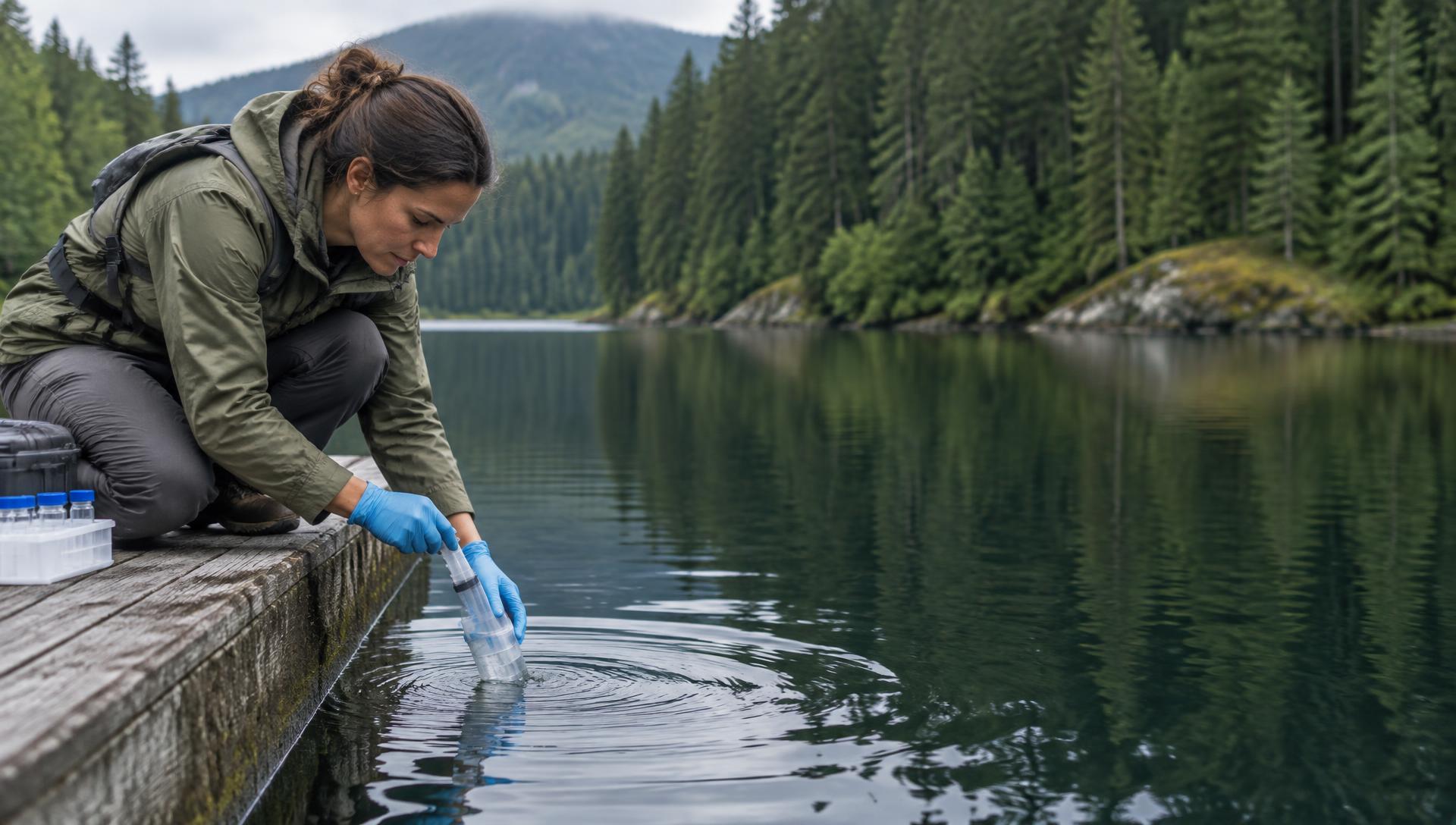
Collect your water or soil sample as directed by your kit. Keep collection materials clean and avoid touching sample surfaces.
Label your sample with its ID and record the location, date and any field notes in your Field Journal.
Seal your collection materials following the included directions and use the provided return mailer.
Once analysis is complete, your detected species and survey information will be available in your Field Journal.
Plan your collection
Agree on site names, document conditions at each location and keep a clear record of who collected each sample.
Wondering how many samples your goals need? Our Survey Architecture guide covers spatial replication, hydrology and target-driven scaling.
Need a quote? Design your kit