Land Stewardship
Rewilding your yard: a practical getting-started guide
April 1, 2025 · 7 min read
Rewilding a yard does not mean letting it become an unmowed thicket that terrifies your neighbors. It means restoring ecological function — plant diversity, structure, insect food webs, soil biology — while keeping the parts of the human landscape you actually use. Here is how to start without regretting it a year in.
Start with an audit, not a bulldozer
Spend a full growing season observing before you demolish. Note where water pools, which corners get shade, what already blooms and when, which trees are natives worth keeping, and which are invasives worth removing.
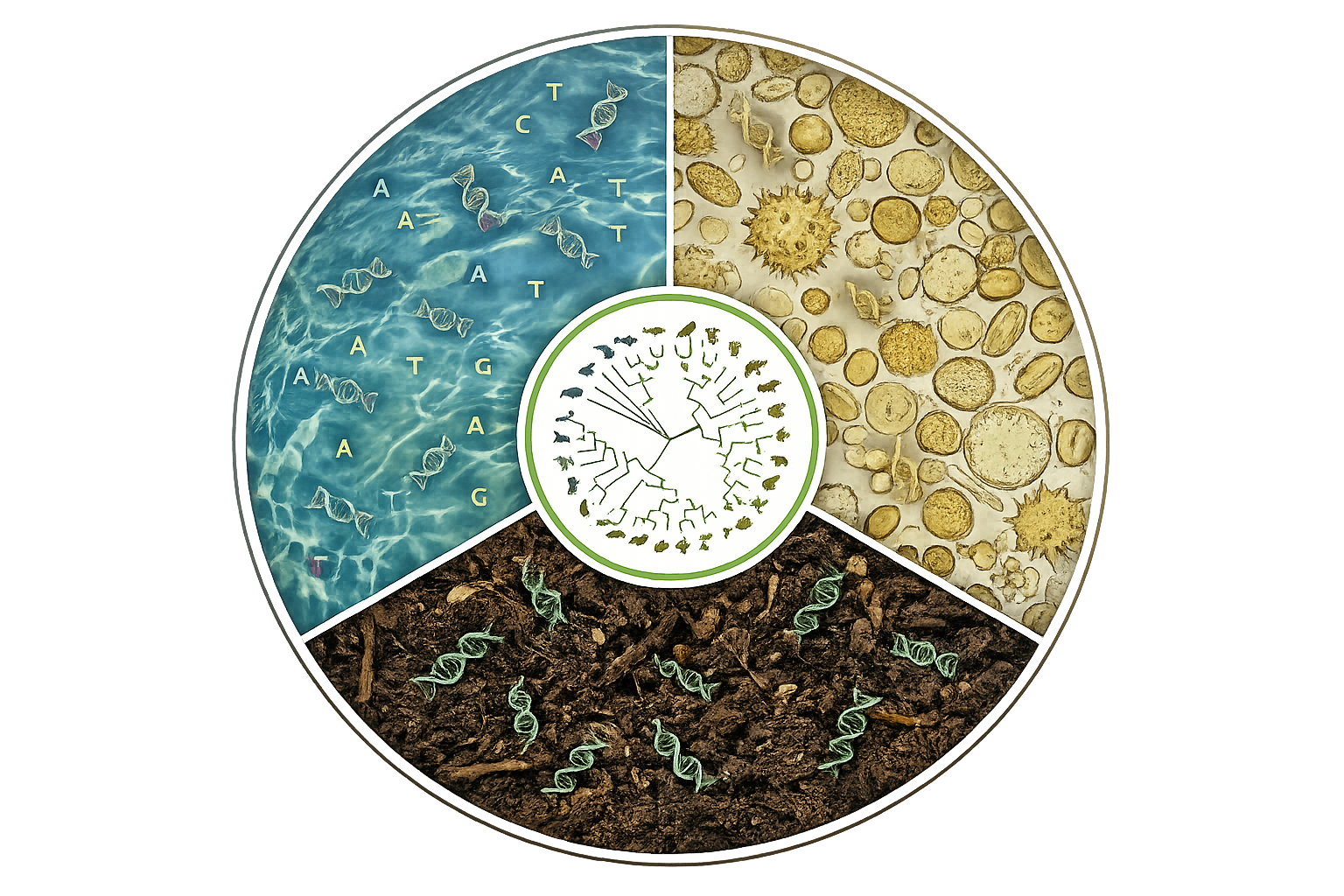
A baseline biodiversity survey — visual, acoustic, and eDNA — at the start is what lets you measure whether your work is working.
Shrink the lawn strategically
You do not need to eliminate lawn. Keep the paths, play areas, and sight lines you actually use. Convert the parts you never walk on into planted beds, meadow patches, or shrub layers. Even a 30 percent lawn reduction dramatically raises biodiversity.
Curved bed edges parallel to the existing lawn line read as intentional; ragged expansion reads as neglect. This distinction matters for HOA reviews and neighbor perception.
Plant in layers
Ecosystems are three-dimensional. A yard with canopy trees, understory trees, shrubs, herbaceous perennials, and ground cover supports several times more wildlife than the same square footage of one layer.
Prioritize keystone genera for your region — oaks in most of the East, willows and cottonwoods along water, cherries widely — and fill in with native perennials that bloom in sequence.
Leave the mess
Leaf litter, standing stems, deadwood, and bare soil patches are habitat, not neglect. Discreetly leaving them in back beds and out-of-sight corners gets you 80 percent of the wildlife benefit for 10 percent of the neighbor friction.
Add water
Even a small pond — 100 square feet, no fish — becomes a magnet for amphibians, dragonflies, birds, and mammals within a year. A shallow bird bath is a smaller version of the same principle.
Measure the difference
Repeat your baseline survey every year or two. Rising bird diversity, appearance of amphibians, higher pollinator counts, and expanding fungal networks are the observable payoffs. Property-scale eDNA sampling is the most efficient way to see how far the recovery has actually gone.
Frequently asked questions
Will rewilding hurt property value?
Well-designed native landscaping typically maintains or increases value. Unkempt, unedged plantings can hurt it. The design principle is 'intentional, layered, edged' rather than 'abandoned.'