eDNA Science
How long does eDNA last in the environment?
January 30, 2025 · 5 min read
One of the most useful and most misunderstood facts about eDNA is that it degrades. Detection is a race between DNA release from organisms and DNA breakdown by UV, microbes, temperature, and enzymes. Understanding that race is what lets you interpret whether a species was there yesterday, last month, or last century.
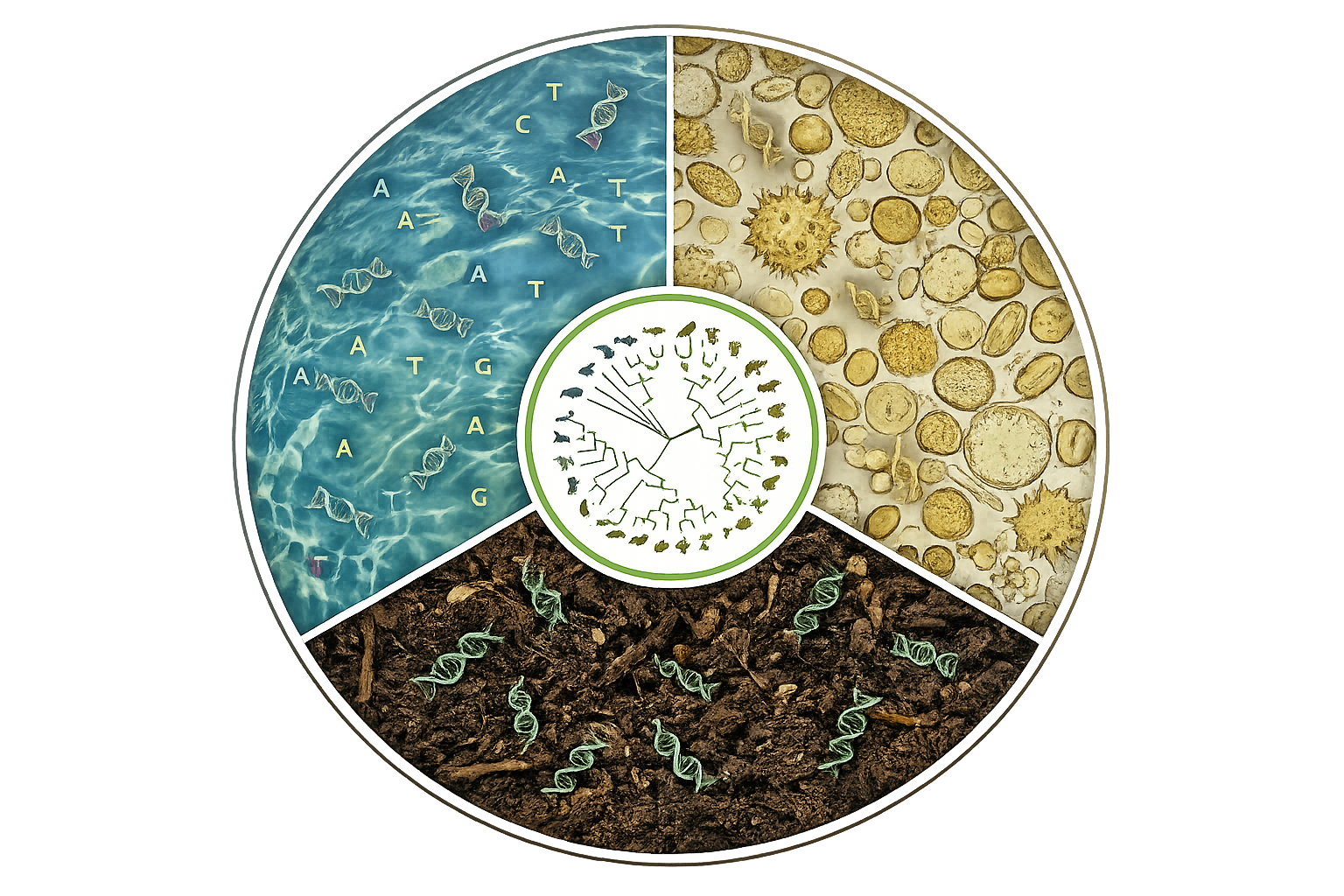
Water
In warm, sunlit, well-oxygenated water, eDNA can drop below detection within 24 to 48 hours. In cold, shaded, low-oxygen conditions, it can persist for weeks. Flow matters too — a fast river dilutes and carries DNA far from its source, while a still pond concentrates it near where it was shed.
This is why aquatic eDNA is generally interpreted as 'recent presence within days to a few weeks' rather than 'sometime in the last year.'
Soil
Soil is a much better DNA preservative than water. DNA binds to clay and organic particles that shield it from enzymes, and the microbial community is often nutrient-limited enough that free DNA is not immediately consumed. Signals from weeks to months are routine, and cold or acidic soils can preserve DNA far longer.
The tradeoff is spatial precision. A soil sample integrates whatever passed through, was buried, or grew there over that time window — great for inventory, less useful for pinpointing when.
Sediment and permafrost
Lake and bog sediment can preserve identifiable DNA for centuries to tens of thousands of years. Cored sediment is now used to reconstruct historical fish, plant, and mammal communities, including species that went locally extinct.
Permafrost pushes it further. Sequenced DNA from Siberian and Yukon permafrost has revealed woolly mammoth, horse, and steppe ecosystems from more than a million years ago.
What speeds degradation
The main enemies are UV light, warm temperatures, microbial activity, and physical shearing. Anything you can do in a sample kit to shield DNA from those forces — desiccant, buffer, cold packs, opaque tubes — extends the shelf life between collection and lab.
Frequently asked questions
If a species shows up in eDNA, does that mean it was there today?
For aquatic samples, usually within the last few days to weeks. For soil, within the last few weeks to months. Ancient sediment cores are the exception.
Can you tell how old an eDNA signal is?
Not directly from a single sample. Repeat sampling and knowledge of local degradation rates are the best way to constrain timing.