Backyard Biodiversity
Why fungi diversity is a signal of a healthy yard
March 24, 2025 · 5 min read
The visible mushrooms in your yard are the fruiting bodies of vast fungal networks that live in the soil, in decaying wood, and inside the roots of most of your plants. Fungal diversity is one of the best single indicators of soil and ecosystem health.
What fungi do
Saprobic fungi break down leaves, wood, and organic matter into forms plants can use. Mycorrhizal fungi form symbioses with plant roots, extending their effective reach by orders of magnitude and trading soil nutrients for plant sugars. Pathogenic fungi keep plant and insect populations in check.
Take any of those away and the yard's nutrient cycling stalls, plants become less resilient to drought, and pest populations climb.
Why lawns are fungal deserts
Turfgrass monocultures, fungicide use, bagged and hauled clippings, and constant physical disturbance together suppress the fungal community. This is a big part of why suburban lawns require constant chemical inputs to stay green: the natural nutrient-cycling infrastructure has been dismantled.
How to encourage fungi
Leave leaf litter. Retain fallen wood. Reduce or eliminate fungicides. Plant native trees, especially oaks, pines, and beeches that support rich mycorrhizal communities. Inoculate stumps and mulch piles with edible saprobes if you want fruiting bodies.
Seeing what is there
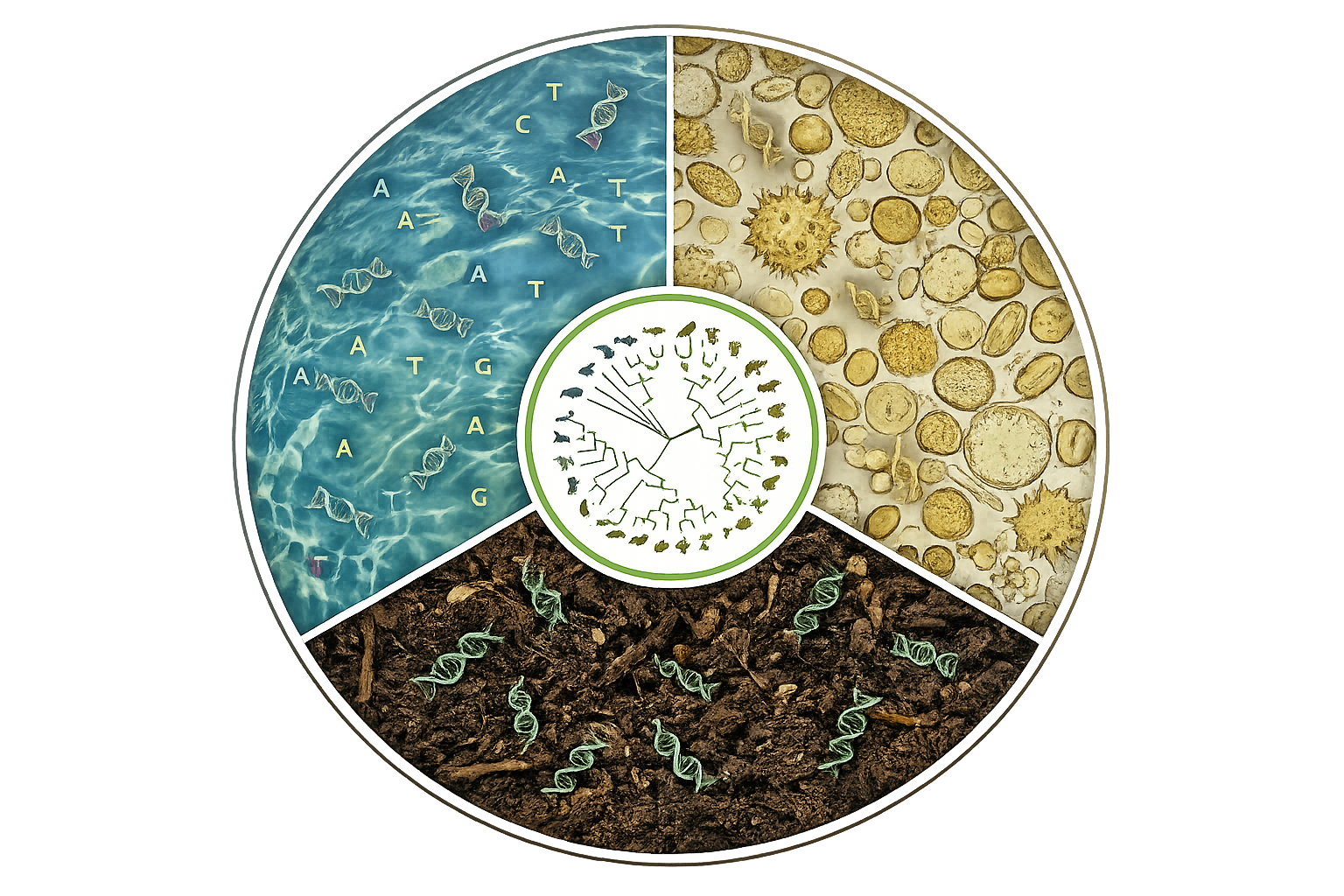
Most yard fungi never fruit visibly. Soil eDNA with ITS primers is the standard way to actually inventory the fungal community — often turning up hundreds of species per soil core, most of them unnamed to non-specialists.